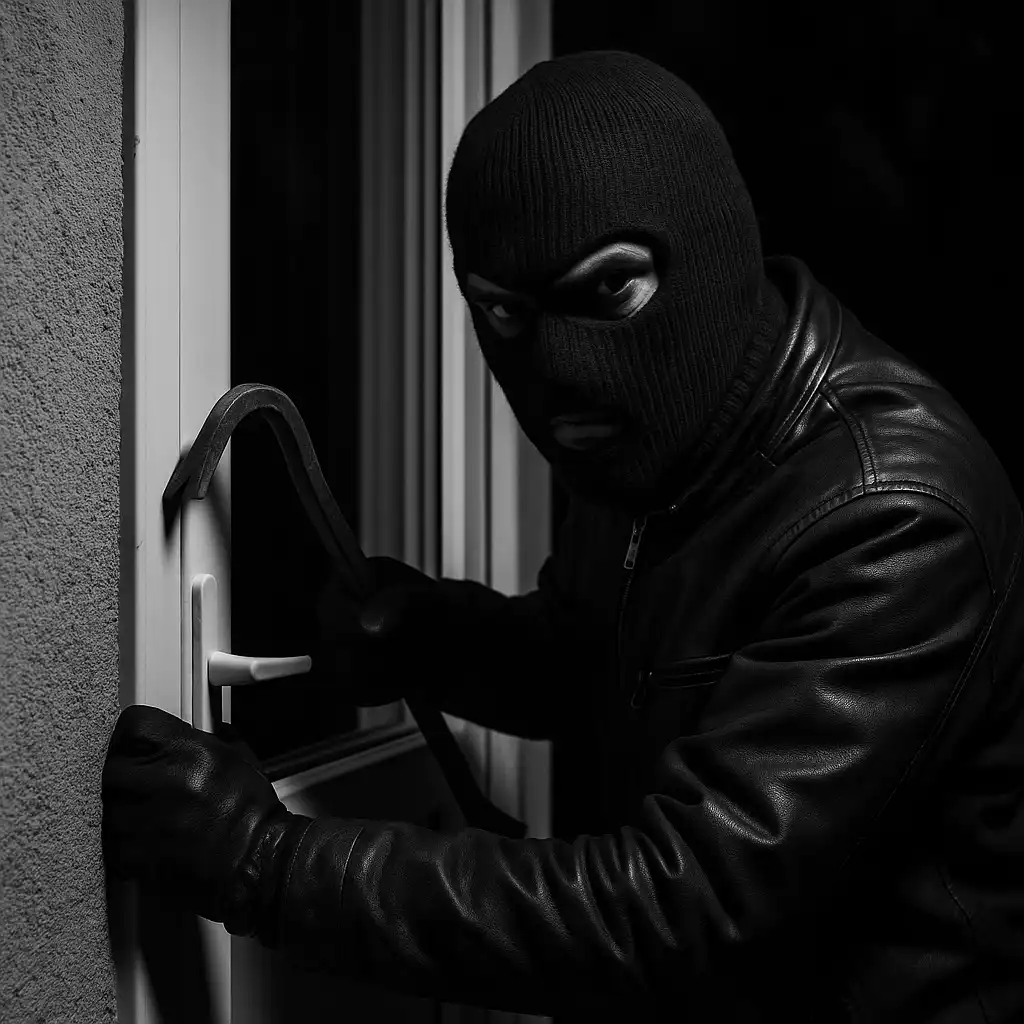

Editor’s note: This article was originally published in early 2025 and remains relevant today. It has been updated to reflect changes in crime patterns and modern approaches to burglary prevention.
The Background
You might have noticed recent reports from the BBC highlighting a significant rise in burglaries across parts of Wales (source), with Dyfed Powys Police showing an increase of up to 27%, adjusted to 26% due to a change in reporting methodology.
It's easy to be alarmed by such headlines, but when looking closer at our home policing areas (Gwent and South Wales Police), the picture is more stable. Gwent recorded a 0% change and South Wales a 1% rise, effectively making the rate of burglary static for our local communities.
What is Burglary?
While there are various forms of theft and robbery, burglary has a distinct legal definition under the Theft Act 1968. It is defined as:
“Entering a building or part of a building as a trespasser with intent to commit theft, grievous bodily harm, or criminal damage; or stealing or attempting to inflict grievous bodily harm having entered as a trespasser.”
A key point is that the offence must involve a building whether residential or commercial. Interestingly, no physical 'breaking in' is required. Entry through an unlocked door or open window still meets the criteria for burglary if done as a trespasser with intent.
Crime Doesn’t Always Increase: It Evolves
One important point often missed in headline statistics is that crime rarely disappears; it shifts. As homes become better protected, opportunistic offenders adapt their methods and targets.
In recent years we have seen a move away from traditional forced-entry burglaries towards quieter, faster offences that rely on access, familiarity, and speed rather than confrontation. This includes theft from outbuildings, garages, and increasingly, the removal of high-value fixtures from properties that appear unoccupied or unfinished.
Effective security is not just about reacting to last year's crime figures, but anticipating how offenders are likely to adapt next.
Preventing Burglary
As a security company, we are frequently asked for advice on preventing burglaries. People have both a right and a strong desire to feel safe in their own homes. While no solution is foolproof, there are many practical steps that can dramatically reduce your risk.
Here are two key realities:
- Security is about making your home less appealing than others nearby. Burglars are opportunists and they’ll go for the easiest target.
- Most security measures don't make it impossible to get in they make it harder and slower. That time difference is crucial for deterring break-ins.
A high-security lock or reinforced door might delay entry; a monitored alarm or CCTV system narrows the window before authorities or homeowners are alerted.
While advanced security systems are valuable, many highly effective measures are low-cost or free:
- Check door and window frames for damage or rot. For UPVC units, ensure glazing panels aren’t removable from the outside.
- Ensure frames are tightly fixed to the structure (no gaps for crowbars).
- Use your window locks, even the bathroom ones that everybody forgets. If you need ventilation, use the locked open position.
- Always lock doors at night, using deadlocks if available.
- Remove keys from inside locks once the house is secured. Store them nearby but out of sight.
- Invest in a graded safe sourced from a locksmith (not a DIY store) and place it discreetly for ease of use (if it's awkward to get to, there's less chance you'll use it regularly).
- Secure sheds and garages with padlocks or hasps. Lightweight garden structures should be treated as shelters, not secure buildings. Anchor valuables inside them.
It’s also worth remembering that many burglaries are enabled by routine. Predictable patterns such as regular work hours, deliveries left in the same place, or properties that appear consistently unoccupied can be as valuable to an offender as a weak lock. Even things like walking the dog at the same time each day can give a small window of opportunity.
Simple changes such as varying routines, using timed lighting, and ensuring vacant properties still show signs of activity can significantly reduce risk without additional cost.
Adding Electronic Security
For those looking to further reduce risk, adding electronic security is a sound investment. Since 2011, K9 Protection has delivered complete security solutions across South Wales. As approved installers for Ajax Systems, Hikvision, and Serage, we offer comprehensive support from survey to installation and ongoing maintenance.
CCTV or Alarm?
Clients often ask whether to prioritise CCTV or alarms. Where budget is a constraint, it’s common to consider CCTV first. However, unless your CCTV system is actively monitored, we usually advise starting with an intruder alarm.
Why? An unmonitored CCTV setup is a passive system - it captures evidence but does not prevent crime in the moment. An alarm, especially one linked to your phone or a monitoring centre, is a real-time deterrent.
Modern systems like Ajax offer smart notifications and even visual verification so you can see what’s happening before deciding to act.
Choosing the Right Alarm
The market is flooded with alarm systems. At K9 Protection, we exclusively install Ajax alarms because of their European engineering, reliability, and flexible outdoor options. However, any system professionally installed and maintained can offer strong protection.
Avoid self-install kits bought online or given away by insurers. These often lack reliability and more importantly, insurers may not accept them (even the insurer who gifts you the alarm when you take out your policy). Also beware of subscription-based systems that lose functionality if you cancel the service. The true cost of these can be many times higher than a locally installed system over five years.
Verification Matters
One of the most significant changes in electronic security over the past few years has been the shift towards verified alerts. Alarms that simply make noise are easy to ignore; alarms that provide confirmation of an intrusion change how quickly and confidently a response can be made.
Whether through visual verification, system health monitoring, or clear identification of the affected area, modern systems are designed to reduce false activations and ensure genuine incidents receive attention without delay.
Selecting a CCTV System
CCTV systems can be overwhelming to choose from and there’s a vast array of brands, features, and camera styles. All systems we install now come with smartphone alerts, colour night vision, and optional audio or siren deterrents.
We currently offer three distinct CCTV brands and ranges, allowing us to match the right system to your needs. To help guide your decision, ask yourself:
- How close does a person need to be for facial recognition?
- Can the camera capture number plates clearly at your gate or driveway?
- What’s the night-time performance like in either colour or infrared, and at what resolution? Sometimes we'll still recommend black and white night vision for certain scenarios; with the cost of thermal cameras coming down as the technology improves, they're no longer out of reach of the average consumer and worth considering if you have things like woodland adjacent to your home.
We’re here to walk you through these options and help you strike the right balance of visibility, deterrence, and budget.
Final Thoughts
Protecting your home from burglary is about layers and not one magic solution. From practical DIY upgrades to professionally installed electronic systems, each measure strengthens your home’s defences.
At K9 Protection, we don’t just install alarms and CCTV, we partner with you to create security solutions that are realistic, affordable, and built around your lifestyle.
If you’d like a free survey or just want to chat about your options, our team is here to help. Let’s work together to make your home a safer place.